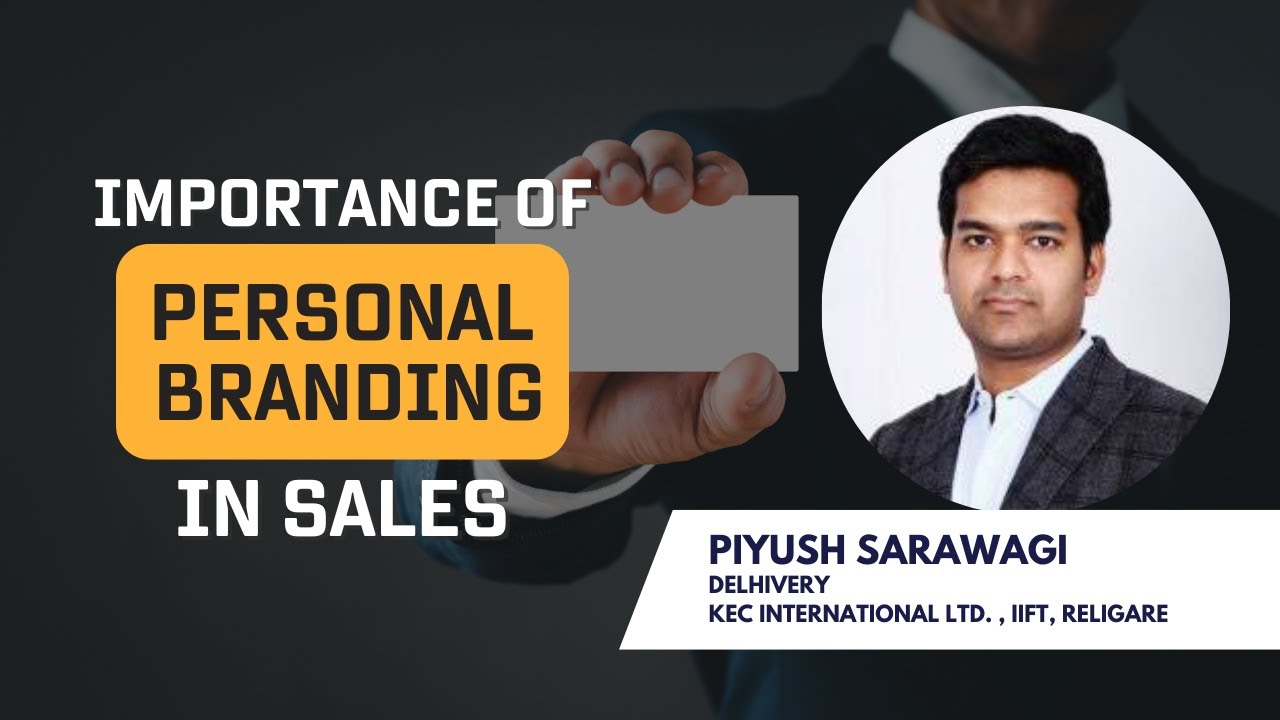
Piyush Sarawagi, a leading expert in digital strategy and personal branding, reveals how your online presence functions as an indispensable, unofficial business school for professional growth. He explains that by intentionally shaping your digital footprint, you can cultivate a powerful personal brand that enhances perceived value, drives sales, and strengthens your position in any negotiation.
People don't buy products and services first, they buy a relationship and they buy a story.
At its heart, personal branding is the deliberate art of curating how you are perceived even when you're not in the room. It's about establishing a distinct identity that sets you apart, positioning you as a thought leader in your field, and ultimately leveraging this reputation to unlock tangible monetary value – be it through sales, networking, or career advancement.
The expert exemplifies this perfectly: his journey building and successfully exiting recruiters.com wasn't just a business triumph, but a masterclass in personal branding. The credibility and recognition he garnered through this venture directly led to significant career opportunities, including a key role at Delhivery.
This demonstrates how a well-cultivated personal brand acts as a powerful catalyst for professional growth and financial gain, proving that your reputation often precedes your physical presence.
Your reputation precedes your presence.
In today's competitive landscape, particularly for high-value services, the most effective sales strategy pivots from product features to human connection. This 'trust-first' approach asserts that a compelling story and a genuine relationship must be established long before any product pitch. Trust is the foundation upon which all successful business transactions are built.
The expert underscores this by recalling instances where superior products failed to close deals because the foundational element of trust in the salesperson was absent. Conversely, he highlights how elements like a strong LinkedIn profile, showcasing past successes or even a photo with a prominent figure like the Prime Minister, instantly cultivate a perception of value and trustworthiness, significantly easing the sales process.
This framework posits that securing trust isn't a bonus; it's the bedrock upon which all lasting business transactions are built.
Sell the story, then the relationship, then the product.
Your online presence extends far beyond casual interaction; it's a permanent professional asset that demands strategic management. Digital Footprint Management emphasizes the critical need for a consistently positive and thematic online presence across all platforms. Negative online content can have enduring and detrimental repercussions on one's professional image, while carefully curated, positive content acts as a continuous builder of credibility.
The expert meticulously maintains his online profiles, such as LinkedIn and Quora, to consistently revolve around themes of careers and jobs. He firmly adheres to the principle of never engaging in negative online interactions, stating, "If I am not happy with someone I will not go and Bash that person online because I do not want to leave a negative footprint."
This disciplined approach ensures his digital persona remains a powerful and positive extension of his professional brand.
Your online presence is your eternal resume.
An impactful personal brand isn't built on generic advice; it's forged through a highly targeted content strategy. This framework involves precisely identifying your ideal audience, selecting the most relevant communication channels where they reside, and then crafting content that delivers real-time, personal insights rather than broad, impersonal statements.
The expert demonstrated this effectively while running recruiters.com. His target audience was co-founders and founders who had recently secured funding. He strategically leveraged LinkedIn, creating content focused on practical topics like "how to grow your team" and "initial hiring."
Crucially, he infused these posts with a personal touch, sharing his own experiences and methods for building high-performing teams, making the advice relatable and actionable for his specific audience.
Right content, right channel, personal touch.
In markets like India, a profound level of trust can command a significant premium for services. The Premium Trust Model posits that when clients place absolute faith in a provider, they are often willing to pay higher prices, enabling businesses to maintain exceptional quality and strong margins without the pressure for aggressive, often compromising, expansion.
The expert observed this phenomenon in digital agencies with small, agile teams (5-6 people) that consistently charged exorbitant premium prices. Their success wasn't due to scale, but because their clients trusted them implicitly. These agencies consciously prioritized delivering high-quality, trusted services over rapid, uncontrolled growth, demonstrating that deep trust is a powerful differentiator that directly translates into monetary value and sustainable business.
Trust enables premium pricing.
While B-schools provide foundational knowledge in general branding and marketing, the expert argues they critically overlook personal branding and direct sales skills. He emphasizes that he acquired these vital 'life skills' through his own entrepreneurial journey, highlighting a significant gap in formal business education. This forces aspiring professionals to seek out and develop these differentiating competencies independently, often through real-world experience.
The expert fundamentally challenges the notion that sales is a feature-driven exercise. He asserts, "People don't buy products and services first, they buy a relationship and they buy a story." He cites numerous instances where excellent products failed to sell because the salesperson couldn't build trust or connect on a personal level, reinforcing that emotional connection and credibility are paramount over mere product specifications.
Contrary to viewing social media as a casual platform, the expert stresses its role as a permanent professional asset. He warns that "a digital footprint remains forever" and advocates for a highly strategic, positive, and consistent content approach. This means avoiding negative interactions and focusing on platforms like LinkedIn to build a professional theme that consistently reinforces one's expertise and trustworthiness, essentially treating it as an 'eternal resume'.
“What specific problem are you trying to solve, and how does your existing network or reputation currently position you to solve it?”
Purpose: Self-assessment of brand-solution alignment.“Who is your ideal client, and on which digital platforms do they primarily seek out trusted experts or solutions?”
Purpose: Audience and channel identification for targeted branding.“What unique story or personal journey can you share that demonstrates your expertise, beyond just listing your qualifications?”
Purpose: Crafting an authentic, trust-building narrative.“Before approaching a potential client, what does your digital footprint (LinkedIn, personal website, etc.) communicate about your credibility and values?”
Purpose: Digital footprint audit for trust.“How can you provide value or insights to your target audience before you ever ask for a sale or commitment?”
Purpose: Establishing thought leadership and relationship-building.“What negative online content or interactions might exist that could undermine trust, and how will you address it?”
Purpose: Proactive digital reputation management.Shift from feature-centric selling to relationship-first engagement. Your personal brand on platforms like LinkedIn is your most potent sales tool, building trust before you even speak. Share insights, not just product brochures, to become a trusted advisor.
Your personal story is your startup's most compelling narrative. Cultivate a strong digital footprint that reflects your vision and values, attracting talent, investors, and early adopters. Trust in you translates directly into trust in your venture, enabling premium positioning.
Integrate personal branding into your overall marketing strategy. Encourage leadership to share authentic stories and insights, adding a human touch that resonates deeper than corporate messaging. A credible personal brand amplifies your campaign's reach and impact.
Start shaping your digital footprint strategically from day one. Curate your online presence to reflect your aspirations and skills, creating an 'eternal resume' that recruiters and mentors can trust. Your personal brand opens doors to opportunities beyond your academic record.
If they like you, they listen to you, but if they trust you, then only they will do business with you.
Join thousands of Indian professionals learning from industry experts.
Explore All Courses →